

How does analytics in healthcare work?
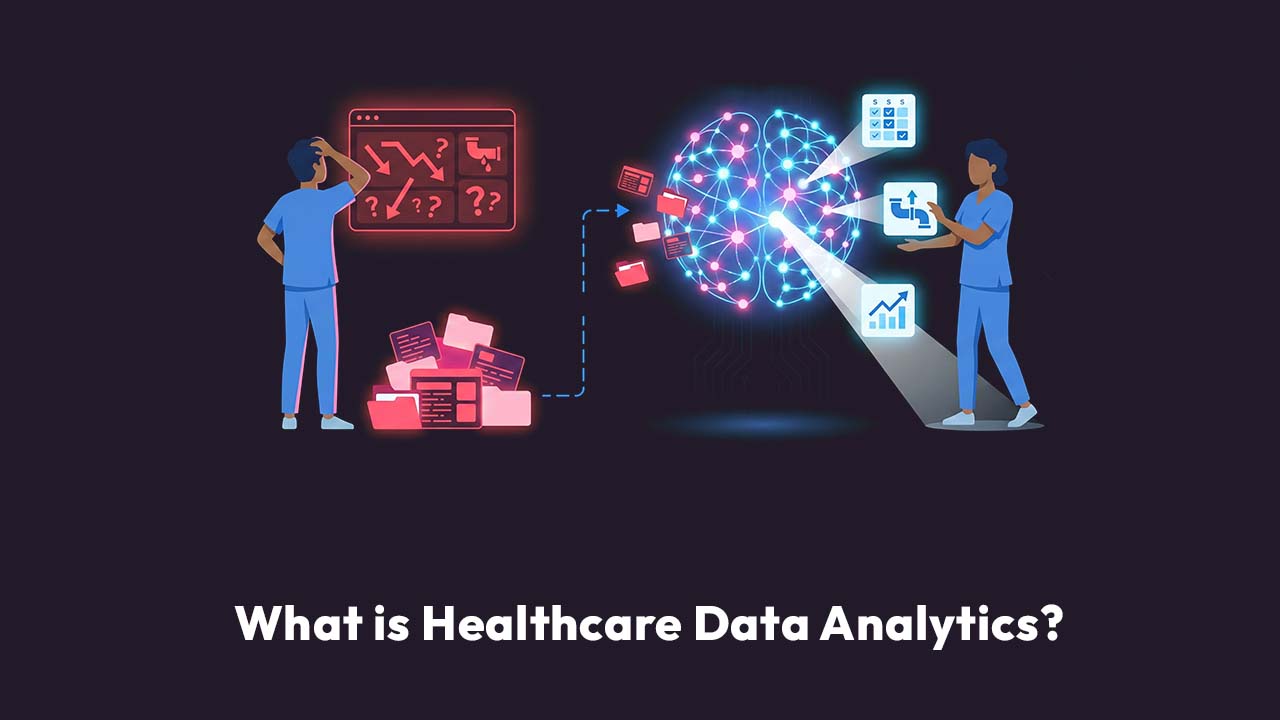
Analytics in healthcare is the systematic use of data—clinical, financial, and administrative—and analytical techniques to uncover insights that drive better patient outcomes and operational efficiency. It transforms raw information into actionable knowledge through a process of collection, cleaning, and interpretation, allowing leaders to move from reactive management to proactive, data-driven strategy.
The modern healthcare landscape is a "gold mine" of data, yet most operations leaders feel like they are starving in the middle of a feast. You have the Electronic Health Records (EHRs), the billing systems, and the patient surveys, but you still spend your Sunday nights wondering why your readmission rates spiked or why your staffing costs are ballooning despite a lower patient census.
The problem isn't a lack of data; it's the "last mile" of analysis. Traditional dashboards show you what happened, but they leave you alone to figure out why. We’ve seen it firsthand: the gap between a static chart and a strategic decision is where most healthcare initiatives go to die.
This is where healthcare analytics—specifically the next generation known as Domain Intelligence—changes the game.
What is Analytics in Healthcare?
Healthcare analytics is the process of analyzing all healthcare-related datasets—including clinical, administrative, and financial data—in all forms (electronic, documented, or behavioral) to reveal insights, patterns, and trends. It is the intersection of technology and medicine, promising to transform how we manage, deliver, and access medical services.
For a business operations leader, analytics for healthcare isn't just a technical requirement; it's a strategic imperative. It provides the "single source of truth" needed to reduce operating costs, improve efficiency, and treat patients effectively in an increasingly complex environment.
The Core Pillars of Healthcare Data
To understand what is analytics in healthcare, you must first understand the disparate streams of data it seeks to unify:
- Clinical Data: EHRs, physician notes, medical imaging, lab results, and genomic information.
- Administrative Data: Bed usage rates, staff allocation, patient flow metrics, and wait times.
- Financial Data: Insurance claims, billing cycles, supply chain costs, and profitability analysis.
- Patient Behavior Data: Wearable device outputs, sentiment analysis from surveys, and even social determinants like economic status.
The Four (and a Half) Types of Healthcare Analytics
Most textbooks discuss four types of analytics. However, at Scoop, we believe there is a fifth category—Agentic Analytics—that is finally solving the operational hurdles leaders face.
1. Descriptive Analytics: The Baseline
Descriptive analytics is your historical narrative. It summarizes large datasets to understand trends or benchmarks, often appearing as a dashboard. In healthcare, this means monitoring ward admission rates, bed usage, or medication adherence. While essential, it is a "rearview mirror" approach; it cannot tell you how to influence future outcomes.
2. Diagnostic Analytics: Finding the "Why"
Diagnostic analytics helps identify the "why" behind past events using root-cause analysis and data mining. If your readmission rate spiked, diagnostic analytics digs into the correlations—was it a specific discharge protocol, a lack of follow-up visits, or a certain patient demographic?.
3. Predictive Analytics: The Proactive Shift
This is where the industry is moving. Predictive analytics uses historical and patient data to predict needs, avoid complications, and save resources for chronic cases. It’s about catching the signal before it becomes a crisis—identifying risk factors for disease progression before the patient returns to the ER.
4. Prescriptive Analytics: The Actionable Path
Prescriptive analytics uses machine learning to suggest a strategy by taking in numerous inputs. It goes one step further than predictive analytics, guiding healthcare providers in making informed decisions about treatment plans and resource allocation, such as ventilator distribution in a hospital unit.
Why Traditional Healthcare BI Is Failing You
Have you ever looked at a perfectly designed dashboard and thought, "Great, I'm red on patient throughput. Now what?"
Most healthcare analytics projects fail because they ignore the "Last Mile." Traditional BI tools (like Tableau or PowerBI) show dashboards of what happened, but they require a manual investigation by a human to find the why.
The result? Your clinical and operations teams are burdened with "data janitor" roles, cleaning messy CSV exports instead of managing the facility. In an environment where every minute matters, waiting weeks for a data analyst to run a SQL query isn't just inefficient—it's dangerous.
The "Build or Buy" Trap
Many organizations try to build their own semantic layers or hire massive data science teams. But generic AI knows nothing about your specific hospital’s business rules. You need a platform that encodes your executive expertise—the patterns you look for, the thresholds that matter—and scales it across the entire organization.
The Scoop Solution: Domain Intelligence in Healthcare
Scoop Analytics is the world's first Domain Intelligence platform. It’s designed to transform business leaders into data scientists by combining the simplicity of a spreadsheet with the power of an autonomous AI investigator.
1. The In-Memory Spreadsheet Engine: Data Engineering for Non-Engineers
Healthcare data is notoriously messy. Different vendors use different date formats; billing codes vary; patient names are misspelled. Usually, fixing this requires a data engineer and complex SQL.
Scoop’s Spreadsheet Engine changes this. It allows you to use familiar Excel logic—VLOOKUP, SUMIFS, INDEX/MATCH—on millions of rows of data in-memory. If you can use a spreadsheet, you can do sophisticated data preparation.
- Business Impact: A business analyst can perform tasks that would otherwise require a data engineer, reducing the time to insight from weeks to minutes.
2. The Three-Layer AI: Real Data Science, Not Black Boxes
Most "AI" in analytics is just a chatbot overlay. Scoop uses a unique Three-Layer Architecture:
- Layer 1 (Auto Data Prep): Automatically handles missing values and outliers in your patient records.
- Layer 2 (Real ML): Runs industrial-strength machine learning models (like J48 Decision Trees with 800+ nodes) to find real statistical patterns.
- Layer 3 (Business Translation): Takes that complex "math speak" and translates it into a consultant-quality executive summary.
- Result: You don't get a p-value; you get a recommendation: "Your readmission rate is driven by a 35% drop in follow-up calls for the 25-34 age segment.".
3. Domain Intelligence: Encoding Your Expertise
Every hospital CEO or COO has "patterns" they look for. Scoop allows you to capture that expertise in a 4-hour session. The platform then runs 24/7, conducting autonomous investigations on every location or department based on your rules. It wake you up to completed investigations that get smarter every day through natural usage.
Real-World Applications: Transforming Healthcare Operations
How does this look in practice? Let’s look at three "high-value" use cases for healthcare analytics.
Use Case A: Reducing Hospital Readmissions
Readmissions are a major pain point. If a Medicare patient returns within 30 days, the hospital faces significant government penalties.
- The Predictive Approach: By tracking patient recovery time and historical readmission data, analytics can determine which patients are most likely to need readmission before they are discharged.
- The Scoop Twist: Scoop’s Reasoning Engine doesn't just flag a high-risk patient; it automatically investigates the "why". It might find that patients living in a specific zip code lack transportation for follow-up appointments, allowing the hospital to proactively arrange transport.
Use Case B: Revenue Cycle Management (RCM)
Financial performance in healthcare depends on reimbursement rates.
- The Problem: False claims, redundant billing, and duplicate supply orders waste time and money.
- The Analytic Solution: Healthcare analytics software helps identify these anomalies and identifies bottlenecks in billing processes to reduce claim denials.
- The Scoop Twist: Using the Spreadsheet Engine, an RCM leader can blend insurance claim data with clinical notes to find the exact phrasing in a physician's note that led to a denial, correcting the pattern across the entire system.
Use Case C: Workforce and Staffing Optimization
Staffing is your largest expense.
- The Problem: Overstaffing wastes money; understaffing leads to patient safety risks and nurse burnout.
- The Analytic Solution: Forecasting staffing requirements and optimizing personnel needs across departments.
- The Scoop Twist: Scoop for Slack brings these insights directly into the team's channel. When a predicted patient surge is detected, the AI sends a message to the nursing director: "Predicting 20% surge in ER volume tomorrow; suggest moving 2 staff from outpatient to ER.".
The Role of Big Data and Cyber-Security
As you expand your use of analytics for healthcare, you will inevitably encounter "Big Data"—datasets too large for traditional methods due to their velocity, volume, and variety.
The Security Imperative
With the growing storage of health data, hospitals have become targets for cybercriminals. It is the responsibility of healthcare providers to safeguard this sensitive information by improving cybersecurity protocols and "de-identifying" aggregated data.
Scoop’s Security Advantage:
Scoop is built with enterprise-grade security, including SOC 2 Type II certification. More importantly, it features Channel-Based Security:
- A manager in #Sales-Americas only sees Americas data.
- A nurse in #ICU-Ward-A only sees Ward A's data.
- Row-level security is inherited from your existing Slack or organizational structure, ensuring the right people see the right data without complex IT configuration.
How to Get Started: Your 4-Week Action Plan
Implementing healthcare analytics doesn't have to be a multi-year project. With Scoop, you can move from "data swamp" to "domain intelligence" in 30 days.
- Week 1: Data Connection & Audit: Connect your EHR, billing, and survey data sources. Scoop’s Smart Scanner automatically detects file structures and data types.
- Week 2: The Expertise Session: Spend 4 hours encoding your operational "brain" into the platform—what defines a "good" discharge? What is an "emergency" cost spike?.
- Week 3: Pilot & Refinement: Run autonomous investigations on a subset of departments. Let the system learn your specific terminology (e.g., how your facility defines "origination rate").
- Week 4: Full Deployment: Roll out Agentic Analytics across the operation. Wake up to daily briefs that don't just show charts but explain what happened while you were sleeping.
FAQ
Q: Do I need a team of Data Scientists to use Scoop?
No. Scoop is designed for "analytically-savvy business professionals". If you can use Excel, you can use Scoop. The platform acts as your "AI Data Scientist," handling the cleaning and complex math for you.
Q: How is this different from my current EHR reports?
EHR reports are usually limited to clinical data within that specific system. Scoop allows you to blend data from 100+ sources—EHRs, financial software, HR systems, and spreadsheets—to get a holistic view of your operations.
Q: Is it HIPAA and GDPR compliant? Yes. Healthcare data analysts must follow regulations like HIPAA and GDPR. Scoop provides the enterprise-grade isolation and audit trails needed to maintain compliance in a clinical environment.
Conclusion
The future of healthcare is proactive, personalized, and efficient. We are moving away from "managing by walking around" and toward managing by Domain Intelligence.
Imagine a hospital where every operational anomaly is investigated before the CEO even asks about it. Imagine a world where your nursing staff is always exactly the right size, and your readmission rates are at an all-time low because the AI spotted the risk signals days in advance.
Healthcare analytics isn't about replacing the human element of medicine; it's about empowering it. By pulling the signal from the noise, you free your staff to focus on what they do best: saving lives.
Ready to see what your data is actually trying to tell you? Schedule a 30-minute demonstration and let’s investigate your actual healthcare data live. Turn your data swamp into a domain intelligence gold mine today.
Read More
- Accelerate Your Sales Engine: AI Data Analytics and Deal Flow All in Slack
- How AI Analytics in Slack Helps Marketing Teams Turn Data Into Instant Campaigns
- What I Learned About AI Analytics This Week
- Finally: GitLab Analytics That Answer Your DevOps Questions (GitLab + Scoop)
- Best Sales Analytics Tools: Salesforce, HubSpot, Gong [2026]