What Is Domain Intelligence in AI? A Clear Definition
Scoop Analytics
Domain intelligence in AI (AI Performance Management)
Domain intelligence is the term buyers search when they mean something more precise: an AI system that applies the specific logic, thresholds, and judgment of one business rather than generic patterns from the internet.
The category that delivers it now has a clearer name. It is called AI performance management. It is the difference between AI that answers questions and AI that investigates performance.

What "domain intelligence" actually means
Domain intelligence describes an AI system that operates with the embedded knowledge of a specific business: its terminology, its thresholds, its investigation patterns, and the judgment calls experienced operators make automatically. The label some vendors used for this was "domain intelligence".
The working category name is now AI performance management for distributed businesses.
Generic AI is trained on broad data. It answers general questions well. It does not know your business. It does not know that a 4% drop in one segment is a red flag while a 10% drop in another is seasonal noise. It does not know which patterns your best regional VP would flag on a Monday and which they would ignore.
That gap is not a data problem. Every enterprise already has data. It runs on Power BI, Tableau, Excel, a warehouse, or some combination. The missing layer is interpretation: what the numbers mean and what to do next.
A general-purpose model is essentially a very capable reasoning engine. But it doesn't understand your business. A domain-specific agent uses the same base models, but it becomes more powerful through context. By narrowing the domain, you reduce hallucinations and increase the reliability of outputs.
Maria Zervou, Chief AI Officer EMEA, Databricks
Built for the businesses that run everywhere at once.
Scoop exists to bring best-in-class operational diagnostics to every distributed business, not just the ones big enough to staff a team for it. Meet the people building it.
- Operator-first by design
- Built for distributed teams
- Diagnostics, not dashboards
Why generic AI falls short for operations
Generic AI falls short in operations because it lacks business context, not because it lacks capability. Most organizations have tested AI by now.
The pattern is consistent: strong on broad language tasks, weak on anything that needs deep operational knowledge.
- A model that summarizes a document brilliantly still misreads operations data when it does not know what the metrics mean.
- Purpose-built AI does well on structured, repeatable, clearly scoped workflows: operational forecasting, risk scoring, cost benchmarking.
- The gap shows up the moment a dashboard flags an anomaly. The number changed. Now what?
A general model tells you what the number is. It will not tell you why it moved, which parts of the business are connected, what the likely causes are, or what your best people would recommend. As Scoop founder Brad Peters puts it, most of the answer never lives in the question.
85 to 95% of the context of a question you ask is not contained in the question itself. It's all this tribal knowledge.
Brad Peters, Founder and CEO, Scoop
That is the core reason business intelligence has struggled to deliver on its promise. The tools got better at presenting data. They never got better at understanding it. Brad frames the failure rate bluntly.
50% of analytics projects fail, and it's not because of the technology. It's generally because the people implementing don't really understand the business problems.
Brad Peters, Founder and CEO, Scoop
The investigation gap
Dashboards show what happened. AI performance management investigates why. That is not a subtle difference. It is the entire gap between a reporting tool and a system that acts.
- A dashboard updates when a metric moves.
- A performance-management system screens every location, flags the ones that break pattern, and runs a structured investigation on each flag.
- It catches developing issues that did not trigger the first screen, then delivers a narrative with specific, data-referenced recommendations.
How AI performance management gets built
It gets built by capturing how your best operator reads the business, then running that logic everywhere. The question executives ask first is: how does an AI learn to think like our best people?
The answer is a deliberate capture process, not model training.
Most of the value does not come from the model. It comes from the proprietary data the system can securely access, the semantic layer that defines meaning, and the investigation logic it is allowed to run.
Brad describes the capture step with one concrete image.
If I took a tape recorder and recorded everything you thought as you looked at your BI reports, we stick that into the system so it could do that on your behalf.
Brad Peters, Founder and CEO, Scoop
In practice, building it means three things:
- Capture the investigation logic your best operators use, in a hands-on session run by Scoop's team.
- Connect it to the data sources where that logic applies, through existing BI and warehouse connections.
- Structure the output to match how decisions actually get made in your organization.
Your dashboards show what happened. Scoop says what to do.
Scoop adds the diagnostic and action layer your BI tools cannot: finding what needs attention across every location, and what to do about it. Your stack stays exactly where it is.
- Sits on top of your BI
- Diagnostic and action layer
- No migration required
Domain intelligence vs. generic AI: a direct comparison
The short version: generic AI answers a question; AI performance management runs an investigation and prescribes an action. The table below maps the difference across the capabilities operators care about.
Domain intelligence in practice: three verticals
The pattern holds anywhere a business runs many similar units and cannot get its best judgment to all of them. Three examples make it concrete.
Retail operations
A national chain with more than a thousand locations had a problem dashboards could not solve. One person on the operations team could look at a store's numbers and spot trouble six months out. The rest of the field team saw the same data and reached different conclusions. That judgment could not scale.
- Every store gets screened each cycle across independent lenses: revenue balance and leading indicators.
- Flagged locations receive a full investigation, with ML root cause discovery and reports rolled up from store to district to region to executive.
- A safety net catches developing issues at locations that passed the initial screen, before they escalate.
Hospitality
Hotel management companies run dozens or hundreds of properties for owner-investors. Their best regional VPs can read a P&L and explain what is driving GOP changes. They cannot cover every property every month, and owner reports show numbers without explaining them.
- Each property gets investigated against its own demand patterns, competitive set, and rate dynamics.
- The output is an explanation: what drove the result, what is developing, and what the management company recommends.
- Independent operators are in a real squeeze, with RevPAR still below 2019 levels and operating costs up sharply since then, per industry data from CBRE.
Franchise and management groups
Franchise and management groups set standards, then watch them slide unit by unit. The best practice gets agreed to on the call. What happens next is the problem.
A performance-management layer monitors every unit against the standard each cycle and flags the moment adherence starts to drift.
- Field consultants stop spending half of every call explaining how they reached a diagnosis.
- The diagnosis arrives already done, so the conversation moves to the action.
- The same drift problem shows up in retail, franchise, and hospitality alike.

What AI performance management is not
A few clarifications worth making explicitly, because the category gets confused with tools it sits on top of.
- It is not a dashboard. Dashboards show what the data says. This tells you what the data means, given what your best people know.
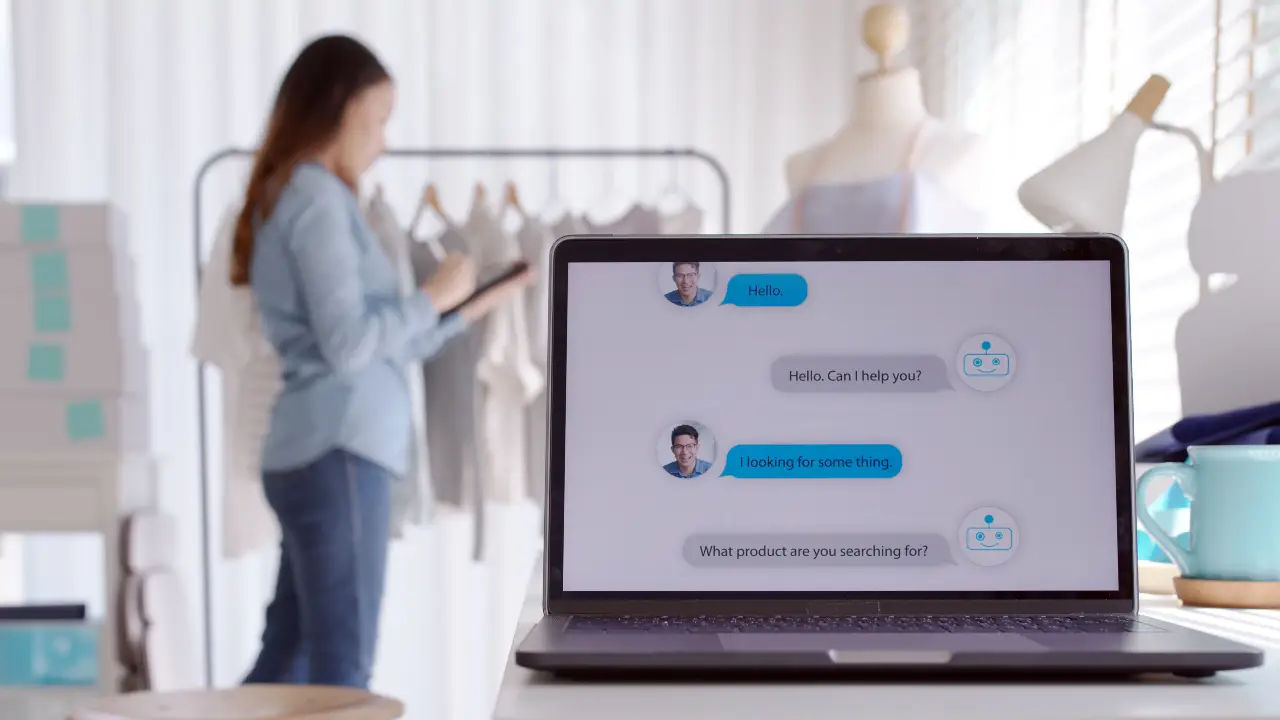
- It is not a chatbot or a natural language query tool. A query answers what you asked. An investigation finds what matters, whether or not you knew to ask.
- It is not a replacement for your operators. It scales expert judgment. It does not replace it.
- It is not a replacement for your BI. It is the layer that sits on top of Power BI, Tableau, or your warehouse and adds interpretation.
On the last point, Brad is precise about where the line sits.
Not AI let loose. It has the guard rails of the specific ways this particular industry thinks and evaluates its own data.
Brad Peters, Founder and CEO, Scoop
Catch the store problem before it hits the P\&L.
Scoop screens every store, every cycle, for comp sales, conversion, labor, and inventory issues. Then it sends the action plan straight to the manager who owns the fix.
- Comp sales and conversion
- Labor and inventory
- Every store, every cycle
Why this matters now
It matters now because the first wave of generalist AI tools has hit a ceiling. The generic assistants deployed in 2023 and 2024 are useful for drafting and summarizing. The next phase of enterprise value comes from systems built for the decisions enterprises actually need to make.
- The question is no longer "should we use AI?" It is "does our AI understand our business well enough to act on it?"
- Teams are flat and timelines have compressed. Everyone is being asked for more from less.
- Encoded business context is not a feature. It is the foundation. Without it, AI is a faster route to the same dashboard.

How Scoop Analytics builds AI performance management
Scoop is built around this capability as its lead product. The process starts with a hands-on session where Scoop's team works with a company's best operators to capture how they think: what patterns to screen for, what thresholds trigger investigation, what dimensions matter, and what recommendations follow from what findings.
That captured logic runs through a consistent pipeline:
- Screen every location against multiple analytical lenses.
- Investigate flagged locations with parallel diagnostic probes and ML root cause discovery.
- Safety net catches developing issues before they escalate.
- Synthesize findings into an executive narrative.
- Roll up to every management level, from location to the C-suite.
The result runs autonomously, on a schedule, across every location in a portfolio. Not a query waiting to be asked. An investigation that runs whether or not anyone remembers to check. Today that arrives as a report produced using Scoop, delivered to the customer.
Scoop's SOC 2 Type II certification, 100+ connectors, and read-only access mean the layer sits on top of the data infrastructure enterprises already run. Most deployments work with existing data. The capture session, not a migration, is where the value gets created. It codifies tribal knowledge so junior staff catch patterns a veteran would catch.
Codify what your best operators already know.
Scoop captures your operators' tribal knowledge, screens every location automatically, and delivers role-specific action plans. Nobody writes a prompt. The plan just arrives.
- Codified tribal knowledge
- Automatic screening
- Action plans, not dashboards
Frequently asked questions about Domain Intelligence in AI
What is the difference between domain intelligence and a BI dashboard?
A BI dashboard reports what happened. AI performance management investigates why it happened and recommends what to do next. Dashboards need a human to interpret the data. This layer captures that interpretive judgment and applies it automatically, across every location in a portfolio, every cycle.
Is domain intelligence the same as domain-specific AI?
Related, but more specific. Domain-specific AI refers broadly to any AI trained or tuned for an industry. AI performance management goes further: it captures the investigative judgment of specific operators inside a specific business, not just sector-wide patterns. It is context at the company level, not the industry level.
How does the judgment get captured?
Through a hands-on session run by Scoop's team. Operators walk through what they investigate, what triggers concern, and what actions follow from what patterns. That logic is codified into structured investigation rules, not generic model training. Brad's framing is a tape recorder for how your best operator reads a report, running on your behalf.
What is the difference between "ai com domain" and domain intelligence?
One is a web address choice. The .ai extension became a branding signal for AI companies, with more than 950,000 registrations worldwide. Domain intelligence is an operational AI capability, now delivered under the category of AI performance management. The naming overlap is coincidental.
Which industries benefit most?
Any operation with many similar units to monitor: retail chains, hotel management companies, franchise groups, property portfolios, real estate brokerages. The value scales with the number of entities that need investigating and the depth of institutional knowledge that cannot currently reach all of them.
Does this require replacing existing data infrastructure?
No. The layer works on top of existing systems. Most deployments connect to sources already in place: POS, PMS, CRM, ERP, and public data. Scoop sits on top of your Power BI, Tableau, or warehouse. The capture session, not a technology overhaul, is where value gets created.