
What Is Analytical Intelligence?
What is analytical intelligence, and why do the top-performing operations leaders seem to have it in abundance? It's the cognitive skill that turns data chaos into clear decisions, spots patterns others miss, and solves root causes instead of symptoms. In this guide, you'll discover how to develop this critical capability—and why combining it with the right tools creates an unstoppable competitive advantage.

Here's something most operations leaders don't realize: You're already using analytical intelligence every single day. When your warehouse efficiency suddenly drops and you dig into shift patterns, inventory flow, and equipment maintenance schedules to find the bottleneck—that's analytical intelligence at work. When you spot a pattern in customer complaints that reveals a supplier quality issue three steps back in your supply chain—that's analytical intelligence saving your business from a much bigger problem.
But here's the uncomfortable truth: Most operations teams are only using about 20% of their analytical potential. Why? Because analytical intelligence without the right support systems is like trying to solve a 10,000-piece puzzle in the dark.
Let me show you what's possible when you understand and develop this critical capability.
Let me walk you through a concrete analytical intelligence example—and show you what's possible when you understand and develop this critical capability.
What Is Analytical Intelligence?
The psychology definition of analytical intelligence centers on componential intelligence — Sternberg's term for the ability to complete academic problem-solving tasks, compare and contrast information, and evaluate ideas critically. Think of it as "book smarts" with a practical edge—the cognitive ability to analyze information, recognize patterns, evaluate options, and solve complex problems through logical reasoning.
But let's get real here. Academic definitions don't help you when your production line goes down or your logistics costs suddenly spike 30%.
So here's what analytical intelligence means in your world:
It's the operations manager who doesn't just see that fulfillment times increased by two days—they systematically identify that the delay started exactly when the new WMS went live, affecting specifically the multi-item orders, and isolated to the afternoon shift when traffic at the shipping dock peaks.
See the difference? One person sees a symptom. An analytical thinker sees the entire system, identifies the specific breakdown point, and knows exactly where to intervene.
Analytical intelligence in operations includes:
- Pattern recognition - Spotting trends before they become problems
- Root cause analysis - Finding the real issue buried under symptoms
- Data interpretation - Making sense of complex operational metrics
- Logical problem-solving - Breaking down challenges into solvable parts
- Strategic thinking - Connecting today's decisions to long-term outcomes
Here's what surprises most people: Analytical intelligence isn't about being the smartest person in the room. It's about being the most systematic.
The data is there. The why isn't.
Scoop connects to your CRM, marketing tools, and spreadsheets and investigates like a senior analyst — testing hypotheses, finding patterns, and surfacing what's actually driving your numbers.
✨ No credit card required • 🔗 150+ data source connections • 👤 No data team needed
Why Should Operations Leaders Care About Analytical Intelligence?
Let me ask you something: How many times this week have you made a critical decision based on incomplete information, gut feeling, or just because "that's how we've always done it"?
If you're honest, probably more times than you'd like to admit. And you're not alone.
A recent study found that 90% of operational decisions in mid-sized companies are still made without proper analytical support. That's staggering. We're living in the data age, and yet most operations leaders are flying blind.
Here's why analytical intelligence matters more now than ever before:
The Complexity Problem
Your operations are more complex than they've ever been. You're managing:
- Multi-channel inventory across 5+ locations
- Supply chains spanning 15+ countries
- Customer expectations for same-day delivery
- Workforce scheduling across shifts and skill sets
- Compliance requirements that change quarterly
Each of these systems generates thousands of data points daily. Your human brain, brilliant as it is, simply cannot process this complexity without analytical frameworks.
I watched an operations director at a mid-sized manufacturer spend three weeks analyzing why their on-time delivery rate dropped from 94% to 87%. Three weeks. By the time they identified the issue (a single supplier consistently shipping 2-3 days late), they'd lost two major accounts.
An analytically intelligent approach would have identified this pattern in about 45 minutes.
The Speed Problem
Here's a hard truth: Your competition is making decisions faster than you are.
Operations used to move at the pace of monthly reports and quarterly reviews. Now? Your competitors are optimizing in real-time. They're spotting trends, adjusting strategies, and solving problems while you're still waiting for your analyst to pull the data.
Speed without intelligence is just chaos. But analytical intelligence at speed? That's a superpower.
The Hidden Value Problem
The biggest operational improvements aren't obvious. They're hidden in patterns that span multiple systems, involve subtle interactions between variables, and only reveal themselves when you know how to look.
Consider this real example: A logistics company noticed their fuel costs were 18% above industry benchmark. The obvious culprits—routing efficiency, vehicle maintenance, driver behavior—all checked out fine.
The real cause? Their load balancing algorithm was optimizing for time, not weight distribution. Trucks were running partially empty on return trips because the system prioritized speed over capacity utilization. The pattern was invisible until someone with analytical intelligence asked: "What if we're optimizing for the wrong variable?"
That single insight saved $2.3M annually.
What Does Analytical Intelligence Look Like in Operations?
Let's get specific. These are some of the clearest examples of analytical intelligence in operations—and they show up in concrete ways that directly impact your bottom line.
Pattern Recognition: An Analytical Intelligence Example of Seeing What Others Miss
Sarah, an operations manager at a consumer goods company, noticed something odd. Customer returns for a specific product line spiked 23% in March. The quality team found nothing wrong. Customer service couldn't identify a common complaint.
Sarah's analytical intelligence kicked in: she pulled data across three dimensions—return dates, customer locations, and purchase channels. The pattern emerged: customers who bought online during a specific promotional period had significantly higher return rates.
Why? The promotion attracted price-sensitive buyers who were fundamentally different from their typical customer. The product wasn't defective—it was being purchased by the wrong customer segment.
This is pattern recognition. Not just seeing the numbers, but understanding what they mean.
Common operational patterns analytical thinkers spot:
- Efficiency drops correlated with specific team compositions
- Quality issues traced to supplier batch variations
- Bottlenecks that shift based on day-of-week demand patterns
- Cost increases driven by hidden dependencies between systems
Problem-Solving: Breaking Down Complexity
Here's where analytical intelligence really shines. Complex operational problems feel overwhelming because they involve multiple interconnected variables. Analytical thinkers don't get overwhelmed—they get systematic.
Take inventory optimization. You've got:
- Demand variability across 200+ SKUs
- Lead times that vary by supplier and season
- Storage capacity constraints
- Cash flow considerations
- Service level requirements
A non-analytical approach: "Let's increase safety stock across the board."
An analytical approach: "Let's segment by demand pattern, criticality, and supplier reliability, then optimize each segment differently."
See the difference? One treats all problems the same. The other recognizes that different problems need different solutions.
Data Interpretation: Turning Numbers Into Decisions
Your ERP system generates 50,000 data points every day. Your WMS adds another 30,000. Your quality management system contributes 10,000 more.
That's 90,000 potential insights daily. Or 90,000 opportunities to drown in noise.
Analytical intelligence is knowing which 10 data points actually matter.
I worked with an operations leader who had fifteen dashboards. Fifteen! He spent two hours every morning reviewing metrics. When I asked what decisions he'd made based on all this data, he paused. "Well, I need to know what's happening..."
Knowing what's happening isn't the goal. Making better decisions is the goal.
An analytically intelligent approach to data:
- Start with the decision you need to make
- Identify the metrics that actually influence that decision
- Establish the thresholds that trigger action
- Ignore everything else
Sounds simple. It's not. But it's powerful.
How Does Analytical Intelligence Actually Work in Daily Operations?
Let me walk you through a real scenario. You'll see exactly how analytical intelligence transforms a common operational challenge.
The Situation: Your distribution center's labor costs increased 22% quarter-over-quarter, but volume only increased 12%. Your CFO wants answers.
**The Non-Analytical Response:
**"Labor market is tight, we had to raise wages." (Stops at the obvious explanation)
The Analytical Intelligence Response:
**Step 1: Question the Question
**Instead of accepting "why did labor costs increase?" reframe it: "Where specifically in our process are we using more labor hours relative to output?"
**Step 2: Break Down the System
**Labor costs aren't monolithic. Segment by:
- Receiving vs. Putaway vs. Picking vs. Packing vs. Shipping
- Shift (day vs. night vs. weekend)
- Product category (small items vs. bulk vs. hazmat)
- Order type (B2B vs. B2C vs. returns)
**Step 3: Find the Pattern
**Data reveals: Picking hours increased 41% while picking volume only increased 15%. That's your problem area.
**Step 4: Dig Deeper
**Why are picking hours disproportionately high?
- Average items per order decreased (more orders, smaller basket size)
- Warehouse reorganization last quarter moved fast-moving items farther from pack stations
- New product categories have non-standard storage locations
Step 5: Quantify Impact
- Old layout: Average 42 items picked per hour
- New layout: Average 31 items picked per hour
- That's a 26% efficiency loss
- At current wages: $18,000 per week in excess cost
**Step 6: Solution Path
**Optimize picker routes based on actual order patterns, not product categorization. Expected improvement: return to 39-40 items per hour, saving $15,600 weekly.
**Total analysis time: 45 minutes.
**Annual impact of the fix: $811,200.
That's analytical intelligence in action. Not magic. Not genius. Just systematic, logical problem-solving applied to real operational challenges.
What's the Difference Between Analytical Intelligence and Just "Being Smart"?
Here's a question I get all the time: "Isn't analytical intelligence just another way of saying someone is intelligent?"
No. And understanding the difference is crucial.
Intelligence is broad. It encompasses creativity, social skills, practical wisdom, emotional awareness, and analytical capabilities. Someone can be brilliant at creative innovation but struggle with systematic analysis. Another person might excel at building relationships but find data interpretation challenging.
Analytical intelligence is specific. It's one type of cognitive capability, focused on:
- Logical reasoning
- Pattern recognition
- Critical evaluation
- Systematic problem-solving
Sternberg actually identified three distinct types of intelligence:
Analytical Intelligence (Book Smarts)
Breaking down problems, analyzing data, logical reasoning. You're probably strong here if you:
- Excel at troubleshooting complex systems
- Naturally see cause-and-effect relationships
- Prefer data-driven decisions
- Can explain complex concepts clearly
Creative Intelligence (Innovative Thinking)
Generating new ideas, thinking outside conventional frameworks, adapting to novel situations. Strong here if you:
- Come up with unconventional solutions
- Thrive in ambiguous situations
- See connections others miss
- Love designing new processes
Practical Intelligence (Street Smarts)
Applying knowledge in real-world contexts, navigating social dynamics, getting things done. Your strength if you:
- Excel at implementation
- Read people and situations well
- Know how to work the system
- Turn ideas into reality
Here's what matters for operations: You need all three, but analytical intelligence is your foundation. You can have brilliant creative ideas and practical execution skills, but without analytical intelligence, you're building on guesswork.
Think of it this way: Creative intelligence designs your new warehouse layout. Practical intelligence gets it implemented on time and under budget. Analytical intelligence ensures it actually improves efficiency by 23% like your model predicted.
How Can You Develop Analytical Intelligence in Your Operations Team?
Good news: Analytical intelligence isn't fixed. You're not born with a set amount that never changes. It's a skill that can be systematically developed.
I've seen operations teams transform their analytical capabilities in 6-12 months. Here's how.
Start With the Right Questions
Analytical thinking starts with analytical questioning. Train your team to ask:
Instead of: "Why is this broken?"
Ask: "What changed right before this started happening?"
Instead of: "How do we fix this?"
Ask: "What are three different ways we could solve this, and what are the trade-offs of each?"
Instead of: "What does the data show?"
Ask: "What decision do we need to make, and what data would help us make it better?"
This isn't semantic games. The quality of your questions determines the quality of your thinking.
Practice the 5-Whys Method (But Do It Right)
You've probably heard of the 5-Whys. Ask "why" five times to get to root cause. Simple, right?
Except most people do it wrong. They stop at the obvious answer or let bias creep in.
Here's how to do it analytically:
Problem: Delivery trucks are returning with items that couldn't be delivered.
Why #1: Why are deliveries failing?
Because customers aren't home.
Stop here and you'll conclude you need better delivery windows. But keep going:
Why #2: Why aren't customers home during delivery windows?
Because we're scheduling deliveries between 9am-5pm.
Why #3: Why are we only offering those times?
Because that's when our drivers work.
Why #4: Why do drivers only work those hours?
Because we optimized routes for fuel efficiency, which requires daylight hours.
Why #5: Why did we prioritize fuel efficiency over delivery success?
Because when we created the routing algorithm, fuel was $4.50/gallon and is now $3.20/gallon, but we never revisited the priority.
Root cause: Outdated optimization priorities in the routing algorithm.
Solution: Reoptimize with current fuel costs and failed delivery costs factored in. Result: Evening delivery options, 31% reduction in failed deliveries, ROI positive even with slightly higher fuel costs.
See how deep you have to go? Most teams stop at Why #2 and implement the wrong solution.
Create Data Interpretation Rituals
Analytical intelligence requires practice. Build it into your operations rhythm:
**Weekly Team Metric Reviews:
**Pick one KPI. Don't just report the number. Ask:
- What's the trend?
- What might be causing it?
- What would we expect to see in related metrics if our hypothesis is correct?
- What decision should this inform?
**Monthly Pattern Analysis Sessions:
**Dedicate 90 minutes to exploring non-obvious relationships:
- "What operational metrics move together that we wouldn't expect?"
- "Where are we assuming causation that might just be correlation?"
- "What seasonal patterns exist in our business that we're not accounting for?"
**Quarterly Deep Dives:
**Choose one persistent operational challenge. Form a small team. Give them a week to analyze it properly:
- Break it into component parts
- Gather multi-dimensional data
- Test hypotheses
- Quantify impact
- Recommend solutions with expected outcomes
This isn't extra work. This IS the work. And it pays massive dividends.
Embrace Intelligent Analytics Tools
Here's where we need to talk about technology. Not because technology replaces analytical intelligence—it doesn't—but because the right tools amplify it exponentially.
Remember that example where analytical intelligence found a $2.3M savings in 45 minutes? That wasn't pure human brainpower. It was human analytical intelligence combined with intelligent analytics that could process complex data quickly.
Traditional BI tools show you what happened. Your dashboard tells you fulfillment times increased. Great. Now what?
Intelligent analytics platforms help you understand why it happened. They don't just report the increase—they automatically test multiple hypotheses across your operational data to identify probable causes.
This is where platforms like Scoop Analytics are fundamentally different from traditional business intelligence. Traditional BI answers the questions you know to ask. Scoop's investigation engine works more like an analytical mind actually thinks—testing multiple hypotheses simultaneously, exploring relationships across dozens of variables, and surfacing patterns that would take weeks to find manually.
Think about that labor cost analysis we walked through earlier. The one that took 45 minutes and saved $811K annually? That's the kind of investigation that's possible when you combine human analytical intelligence with tools built for investigation, not just reporting.
This is the difference between:
- Spending 3 weeks manually pulling data, creating pivot tables, testing theories one at a time
- Getting AI-powered investigation that analyzes multiple factors simultaneously and surfaces the actual pattern in minutes
But here's the critical point: Intelligent analytics amplifies analytical intelligence; it doesn't replace it.
You still need human judgment to:
- Ask the right questions
- Evaluate whether patterns are meaningful or coincidental
- Understand operational context the data doesn't capture
- Make strategic decisions based on insights
- Implement changes effectively
Think of it like this: Analytical intelligence is knowing how to investigate a crime. Intelligent analytics is having forensic tools that reveal fingerprints invisible to the naked eye. You still need the detective—but now that detective is 100x more effective.
What Role Does Technology Play in Amplifying Analytical Intelligence?
Let's be direct: The operations leaders who win over the next five years will be those who combine strong analytical intelligence with powerful intelligent analytics platforms.
Not one or the other. Both.
Here's why this matters more than you might think.
The Complexity Barrier
Your operations generate more data than any human can analytically process. Even someone with exceptional analytical intelligence hits a wall:
- Can you mentally process 50,000 transactions to find subtle patterns? No.
- Can you simultaneously analyze 30 variables to identify which 3 actually drive your outcome? No.
- Can you test 10 different hypotheses about why efficiency dropped, running each against 6 months of historical data? No.
This isn't a capability problem. It's a physics problem. Human brains, no matter how analytically intelligent, have processing limits.
**But here's what you CAN do:
**Frame the right questions, understand which analytical approaches apply, interpret results in operational context, and make strategic decisions.
This is where intelligent analytics becomes transformative. Not by replacing your thinking, but by handling the computational complexity that would otherwise make deep analysis impossible.
The Investigation vs. Query Gap
Most business intelligence tools give you answers to questions you already know to ask. That's valuable, but it's not analytical intelligence.
Real analytical intelligence often starts with: "I don't know what I don't know."
When efficiency drops, you might not know whether the cause is:
- Workforce scheduling
- Equipment maintenance patterns
- Material quality variations
- Process changes
- Seasonal demand shifts
- Supplier delivery timing
- Or some interaction between three of these factors
Traditional BI approach: Manually check each possibility, one at a time, over several days.
Intelligent analytics approach: Automatically investigate multiple hypotheses simultaneously, identify patterns across interconnected factors, surface unexpected relationships.
This is investigation-grade analytics. It mirrors how an analytical mind actually works—exploring multiple angles, testing theories, connecting dots across systems.
I've seen this play out repeatedly. An operations leader asks Scoop: "Why did our customer retention rate drop?" Instead of just showing a retention chart, the platform automatically investigates temporal patterns, customer segment changes, product mix shifts, service quality metrics, and competitive dynamics—testing how each factor correlates with the retention change.
The result? Within minutes, they discover that retention dropped specifically among customers acquired through a particular channel during a promotional period six months ago. These customers had fundamentally different usage patterns and expectations. The problem wasn't the product or service—it was a customer acquisition strategy that brought in the wrong fit.
That's investigation, not just querying. And it's how analytical intelligence actually works when you have the right tools supporting it.
From Data to Decision in Minutes, Not Weeks
Here's a real scenario that illustrates the power of combining human analytical intelligence with intelligent analytics:
**The Challenge:
**Customer churn increased from 8% to 12% monthly. For a subscription operations business, this is existential.
Traditional Analytical Approach:
- Pull churn data by customer segment (1 day)
- Analyze usage patterns of churned vs. retained customers (2-3 days)
- Survey churned customers (1 week for responses)
- Cross-reference with support tickets (1 day)
- Identify patterns and form hypothesis (1 day)
- Validate hypothesis against broader dataset (1-2 days)
**Total time: 2-3 weeks
**Result: By the time you know why, another 200 customers have churned
Analytical Intelligence + Intelligent Analytics Approach:
- Ask the platform: "What factors predict churn?"
- System runs ML analysis across 50+ variables: usage frequency, feature adoption, support interactions, payment history, onboarding completion, time-in-product, etc.
- Identifies pattern: Customers who don't use Feature X within first 30 days have 73% churn probability vs. 4% for those who do
- Reveals surprising insight: Feature X isn't heavily promoted in onboarding flow
- Human analysis: Recognizes Feature X solves the core problem customers hired the product for—not using it means they're not getting value
**Total time: 45 minutes
**Result: Immediate action to improve Feature X visibility in onboarding
The intelligent analytics handled the computational complexity—testing dozens of hypotheses simultaneously, running machine learning models to identify predictive patterns, and quantifying the strength of each relationship.
The human analytical intelligence:
- Framed the right question
- Interpreted the pattern in business context
- Connected it to the customer value proposition
- Designed the operational solution
Neither could succeed without the other.
The Schema Evolution Advantage
Here's something most operations leaders don't think about until it bites them: What happens when your data structure changes?
You add new product categories. Your CRM fields change. You reorganize your warehouse zones. You implement a new quality tracking system.
With traditional BI, this means weeks of rework. Dashboards break. Reports fail. Your data team scrambles to rebuild semantic models and update queries.
Platforms built for analytical intelligence handle this differently. Scoop, for instance, automatically adapts when your data structure evolves—no broken dashboards, no manual model maintenance, no two-week delay while IT rebuilds everything.
Why does this matter? Because your analytical intelligence is only as good as your access to current, accurate data. When tools break every time your business changes, you're back to making decisions blind.
The operations leaders I've seen succeed aren't those with the most stable, unchanging data structures. They're those whose analytical capabilities keep working even as their business evolves.
The Democratization Effect
Here's something powerful: Intelligent analytics platforms effectively give analytical superpowers to your entire operations team.
Not everyone on your team has strong natural analytical intelligence. That's okay—teams need diverse strengths. But everyone on your team needs to make data-informed decisions.
Modern intelligent analytics platforms make this possible by:
- Guiding analytical thinking with structured investigation frameworks
- Surfacing patterns that would require sophisticated analysis to find manually
- Explaining insights in plain business language, not statistical jargon
- Suggesting next questions based on what the data reveals
This doesn't make everyone an analyst. It makes analytical insights accessible to everyone who needs them.
Your warehouse supervisor doesn't need to know regression analysis. But they do need to know that pick errors spike on Tuesday afternoons and are correlated with specific team compositions. An intelligent analytics platform can surface that insight automatically—explained in operational language they can act on immediately.
I worked with a distribution company where the operations team ranged from data-savvy managers to longtime supervisors who'd never built a spreadsheet. Within three months of implementing investigation-grade analytics, even the least technically inclined supervisors were asking sophisticated analytical questions and getting answers they could use.
One supervisor asked: "Which of my team members are most efficient with oversized items?" The platform analyzed historical pick rates segmented by item type and team member, revealed that two specific employees were 34% faster with oversized items, and suggested reassigning those team members to oversized picks during peak periods.
That supervisor didn't write a query, build a report, or understand the underlying statistical analysis. But their analytical intelligence—knowing the right question to ask—combined with intelligent analytics that could answer it, drove a measurable efficiency improvement.
How Do You Know If Your Analytics Tools Match Your Analytical Intelligence?
Here's a quick diagnostic. Ask yourself these questions about your current analytics setup:
Question 1: Investigation or Just Reporting?
When something unexpected happens—a metric drops, costs spike, efficiency changes—do your tools:
A) Show you a chart of what happened and leave you to figure out why manually?
B) Automatically investigate multiple possible causes and surface the most probable explanations?
If you answered A, you have reporting tools, not intelligent analytics. Your analytical intelligence is doing all the heavy lifting without computational support.
Question 2: Schema Flexibility
When your business adds a new data source, changes field names, or reorganizes categories, do your analytics:
A) Break, requiring days or weeks of IT work to rebuild dashboards and reports?
B) Automatically adapt to the changes without manual intervention?
If you answered A, your tools are fighting against your analytical intelligence instead of supporting it. Every business change creates an analytics blackout period where you're making decisions blind.
Question 3: Multi-Hypothesis Testing
When you need to understand why something changed, can your tools:
A) Only test one hypothesis at a time, requiring you to manually run separate analyses for each possible cause?
B) Test multiple hypotheses simultaneously across dozens of variables and rank them by likelihood?
If you answered A, you're spending days on analysis that should take minutes. Your analytical intelligence is being bottlenecked by computational limits.
Question 4: Business Language vs. Technical Jargon
When your tools surface insights, do they:
A) Require you to interpret statistical outputs, understand p-values, and translate technical findings into business language?
B) Explain findings in operational terms your entire team can understand and act on?
If you answered A, you're creating an analytical bottleneck. Only technically skilled team members can use the insights, limiting how widely analytical intelligence can spread through your operations.
Question 5: Speed to Insight
For a typical operational question—"Why did efficiency drop last week?"—how long from question to actionable answer:
A) Days or weeks, involving data extraction, manual analysis, hypothesis testing, and validation?
B) Minutes or hours, with automated investigation that your team can review and interpret?
If you answered A, speed is killing your competitive advantage. By the time you understand what happened, you've missed the window to prevent similar issues.
If you answered mostly A's: Your current tools are designed for reporting, not investigation. They're showing you what happened, but your analytical intelligence has to do all the work of understanding why. This is why analysis takes so long and insights come too late.
If you answered mostly B's: You have tools that actually amplify analytical intelligence. They handle the computational complexity, letting your team focus on interpretation, context, and decision-making.
The difference in operational outcomes is dramatic. We've seen operations teams cut their time-to-insight by 95% simply by moving from reporting tools to investigation platforms built for how analytical intelligence actually works.
What Real Operations Leaders Are Achieving With Analytical Intelligence
Let me share what this looks like in practice. These examples of analytical intelligence come from real operations leaders combining systematic thinking with intelligent analytics:
Manufacturing Operations: From Reactive to Predictive
A mid-sized manufacturer was experiencing unexpected equipment downtime that cost them $45K per incident in lost production. Their maintenance team was reactive—fixing things after they broke.
Their operations manager had strong analytical intelligence but was drowning in data. Equipment sensors generated thousands of readings daily. Maintenance logs were detailed but unstructured. Production schedules added another layer of complexity.
The question: "Can we predict equipment failures before they happen?"
Using an intelligent analytics platform, they automatically analyzed patterns across equipment sensor data, maintenance history, production load, environmental conditions, and operator behaviors. The system identified 17 distinct failure pattern signatures—combinations of sensor readings that predicted specific failure types 2-4 weeks in advance.
The operations manager's analytical intelligence kicked in: She recognized that three of these patterns were actionable with low-cost preventive interventions. The other patterns required expensive fixes better scheduled during planned downtime.
Result: Unplanned downtime reduced by 73%. Annual savings: $1.8M. The analytical intelligence framed the question and interpreted the findings. The intelligent analytics found patterns in data volumes no human could process.
Logistics Operations: Hidden Optimization Opportunities
A logistics company thought they'd optimized their routing. They'd tried three different routing software packages. All showed similar costs and efficiency.
Their VP of Operations asked a different question—one that required real analytical intelligence: "What if we're optimizing for the wrong outcome?"
They used Scoop to investigate relationships between routing decisions and a broader set of outcomes: fuel costs, delivery success rates, driver satisfaction, vehicle wear, customer satisfaction scores, and on-time performance.
The pattern that emerged was surprising: Their "optimized" routes minimized distance but maximized turns, stops in high-traffic areas, and backing maneuvers. These factors didn't affect distance or even total time much, but they significantly impacted driver fatigue, accident rates, vehicle maintenance costs, and customer satisfaction (more backing delays).
Reoptimizing with these factors included—despite slightly longer distances—reduced total operating costs by 18% and improved customer satisfaction scores by 22 points.
The key: Analytical intelligence to question the optimization goal. Intelligent analytics to test the hypothesis across complex, multi-factor data.
Distribution Operations: Workforce Efficiency
A distribution center knew their labor costs per unit were above industry benchmark but couldn't identify why. They'd done time studies. They'd benchmarked processes. Everything looked reasonable.
The operations director used an investigation approach: "What if the inefficiency isn't in individual processes but in transitions between them?"
The intelligent analytics platform analyzed labor hour data alongside order characteristics, warehouse layouts, shift patterns, team compositions, and equipment utilization. It identified that 23% of labor hours were spent in transition activities: walking, waiting, equipment repositioning, and order consolidation.
More specifically: Certain order type combinations created excessive transition overhead. When small-item orders and bulk orders were picked by the same team in sequence, transition overhead consumed 40% of labor hours vs. 15% when order types were segregated.
Solution: Restructure team assignments to minimize order type transitions. Efficiency improved 27%. Labor costs dropped $640K annually.
This wasn't obvious from any single data source. It required analytical intelligence to hypothesize that transitions might be the issue, and intelligent analytics to identify the specific patterns across multiple data dimensions.
Try It Yourself
FAQ
What is analytical intelligence in simple terms?
Analytical intelligence is the ability to break down complex operational problems into understandable parts, identify patterns in your data, and make logical, evidence-based decisions. For operations leaders, it's the systematic thinking that helps you find root causes instead of just treating symptoms.
How is analytical intelligence different from regular business intelligence?
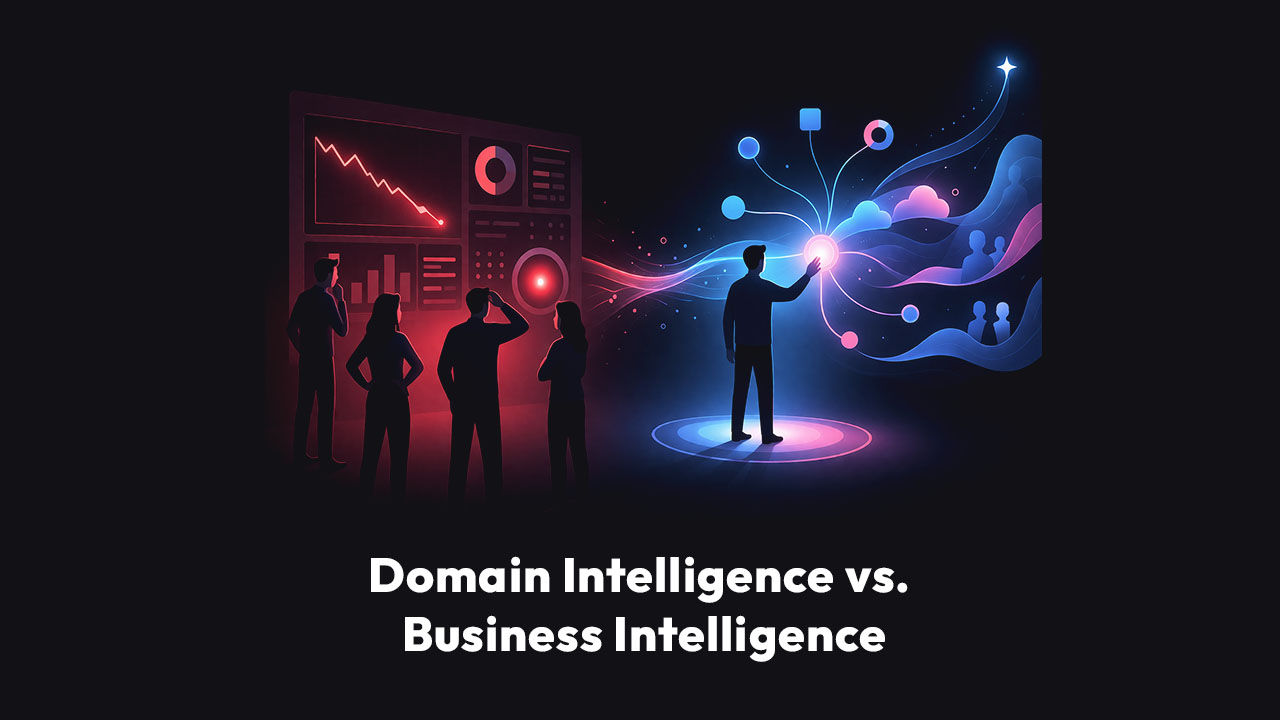
Business intelligence refers to the tools and processes for collecting and displaying data. Analytical intelligence is the cognitive ability to interpret that data, identify what matters, spot patterns, and draw actionable conclusions. BI gives you the numbers; analytical intelligence helps you understand what they mean and what to do about them.
Can analytical intelligence be learned or is it innate?
While some people naturally think more analytically, analytical intelligence is absolutely a developable skill. Through practice with systematic problem-solving, pattern recognition exercises, and structured analytical frameworks, operations teams can significantly strengthen their analytical capabilities. I've seen it happen repeatedly with the right training and tools.
What are the signs of strong analytical intelligence in operations?
Operations professionals with strong analytical intelligence typically: identify problems before they become crises, find root causes quickly instead of treating symptoms, make decisions based on data patterns rather than gut feel, spot connections between seemingly unrelated operational issues, and consistently quantify the impact of proposed changes before implementing them.
How long does it take to develop analytical intelligence?
With focused effort, most operations teams show measurable improvement in analytical thinking within 3-6 months. This includes implementing regular analytical practices, using structured problem-solving frameworks, and working with tools that support analytical investigation. Mastery is a continuous journey, but meaningful capability development happens relatively quickly with the right approach.
What's the ROI of developing analytical intelligence in operations teams?
The ROI is substantial and shows up across multiple areas: faster problem resolution (days to hours), better resource allocation (10-30% efficiency improvements), reduced waste from trying wrong solutions, earlier identification of operational risks, and compound benefits as analytical capabilities improve decision quality across hundreds of choices. Most organizations see 5-10x return within the first year.
How does intelligent analytics relate to analytical intelligence?
Intelligent analytics platforms amplify human analytical intelligence by handling computational complexity that would be impossible manually—like analyzing 50+ variables simultaneously or testing multiple hypotheses across millions of data points. The platform processes data at scale; human analytical intelligence frames questions, interprets context, and makes strategic decisions. They're complementary, not competitive.
What should I look for in analytics tools that support analytical intelligence?
Look for platforms that investigate rather than just report, adapt automatically when your data structure changes, test multiple hypotheses simultaneously, explain insights in business language rather than statistical jargon, and deliver answers in minutes rather than days. The tool should work the way analytical minds actually think—exploring multiple angles and surfacing unexpected patterns—not just answering predetermined questions.
How is investigation-grade analytics different from traditional BI?
Traditional BI answers questions you know to ask: "Show me revenue by region." Investigation-grade analytics helps you understand questions you don't know to ask: "Why did revenue drop in the Northeast?" It automatically explores multiple potential causes, ranks them by likelihood, and surfaces patterns you might never have thought to look for. Platforms like Scoop represent this investigation approach—working more like a data scientist who tests hypotheses than a dashboard that displays numbers.
Conclusion
Here's what we've covered, and why it matters for you:
Analytical intelligence isn't an abstract academic concept. It's the systematic thinking capability that separates operations leaders who react from those who anticipate. Who guess from those who know. Who struggle from those who thrive.
You already have analytical intelligence. Every time you troubleshoot an operational issue, you're using it. The question isn't whether you have this capability—it's whether you're developing it intentionally and supporting it effectively.
The operations landscape is more complex than ever. More data. More variables. More interdependencies. More pressure to optimize. The leaders who succeed aren't those with the most resources—they're those who can think analytically about the resources they have.
And here's the opportunity: Most of your competitors aren't doing this. They're still making operational decisions based on gut feel, treating symptoms instead of root causes, and drowning in data without extracting insight.
Your move is clear:
First, start developing analytical intelligence systematically in your team. Practice structured problem-solving. Ask better questions. Build analytical thinking into your operational rhythms.
Second, recognize that in today's environment, human analytical intelligence needs technological amplification. The combination of systematic thinking and intelligent analytics is what transforms good operations into exceptional ones.
Traditional BI tools aren't enough anymore. They show you what happened, but your analytical intelligence has to do all the work of figuring out why. That was sustainable when operations were simpler and slower. It's not sustainable now.
You need platforms that work the way analytical minds actually work—investigating, not just reporting. Testing multiple hypotheses simultaneously. Adapting when your business changes. Explaining insights in language your entire team can understand and act on.
The companies that figure this out—that combine strong analytical intelligence with investigation-grade platforms built to amplify it—will dominate their markets over the next decade.
The question is whether you'll be one of them.
**What operational challenge could you solve in 45 minutes instead of three weeks?
****What patterns in your business remain invisible simply because you haven't had the tools to see them?
**What's the cost of making one more major operational decision based on incomplete analysis?
Analytical intelligence gives you answers. Intelligent analytics platforms like Scoop amplify that intelligence to enterprise scale. The only question is whether you're ready to develop both.
Your competitors are already making this shift. The operations leaders winning in their markets aren't the ones with the biggest budgets or the most resources. They're the ones who think more analytically, investigate more systematically, and act more quickly on better insights.
Start today. Ask better questions. Challenge assumptions. Test hypotheses systematically. And give your analytical intelligence the computational support it needs to work at the speed and scale your business demands.
The capability is within reach. The ROI is measurable. The competitive advantage is real.
What will you discover when you combine your analytical intelligence with tools built to amplify it?
Get insights like this every week
Analytics, ops strategy, and product updates. No noise.
Keep reading


Book a discovery call
Reach out to start a two-way conversation about your industry, your performance variations across locations, and whether Scoop is the right fit for you.