
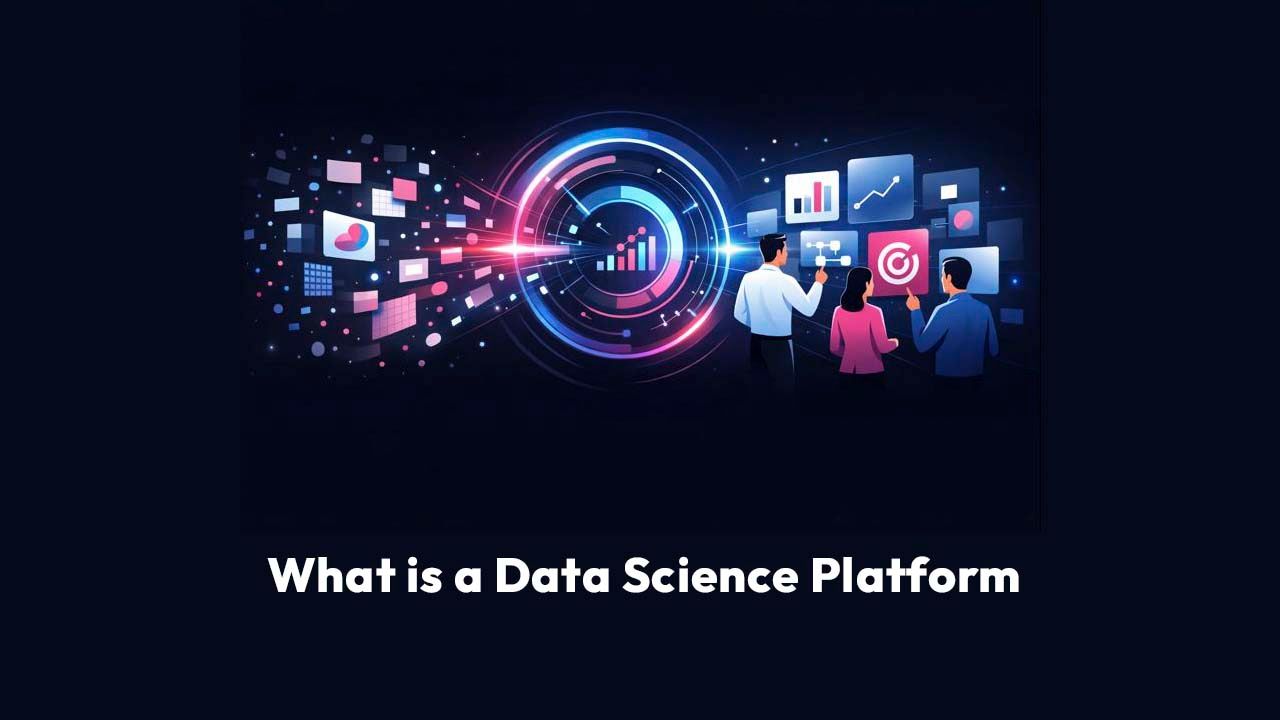
What is a Data Science Platform
Ever feel like your company is "data-rich" but "insight-poor"? While most leaders are buried under static dashboards that only show what happened, a true visual data science platform like Scoop Analytics automates the investigation into why it happened. This guide breaks down exactly what is a data science platform and how it bridges the "last mile" gap between raw data and executive action, turning every operations leader into a data-driven powerhouse.
You aren't alone. In fact, most operations leaders are drowning in "what" while starving for "why." We’ve spent the last decade building massive data warehouses and complex visualizations, yet on Monday morning, your team is still spending four hours in spreadsheets trying to prepare a 10-minute briefing.
In this guide, we are going to explore why the traditional way of handling data is failing the modern enterprise and how a visual data science platform is the "missing link" that turns raw information into actual business domain intelligence.
What is a data science platform?
A data science platform is a centralized software hub that integrates the entire data lifecycle—from data preparation and machine learning modeling to business-language explanations. It allows non-technical business users and data scientists to collaborate, automate complex investigations, and deploy predictive insights directly into business workflows like Slack or CRM systems.
For a business operations leader, think of it as an "intelligence factory." Instead of having one person who knows SQL, another who knows Python, and a third who knows the business logic, the platform provides a unified environment where those three disciplines meet. It moves your organization away from static reports and toward Agentic Analytics™—AI that doesn't just show you a chart but investigates a hypothesis.
The data is there. The why isn't.
Scoop connects to your CRM, marketing tools, and spreadsheets and investigates like a senior analyst — testing hypotheses, finding patterns, and surfacing what's actually driving your numbers.
✨ No credit card required • 🔗 150+ data source connections • 👤 No data team needed
Why does your business need a data science platform now?
If you feel like your data team is a bottleneck rather than an accelerator, you’re experiencing the "Last Mile" problem of BI.
How does the "Last Mile" problem impact operations?
The "Last Mile" refers to the gap between having a data visualization and taking a profitable action. We've seen it firsthand: a VP of Sales sees that churn is up 15%. They ask the data team for a breakdown. The data team takes three days to write the SQL, clean the data, and run a manual regression. By the time the answer comes back, the window to save those customers has closed.
A data science platform like Scoop Analytics solves this by:
- Removing the Technical Barrier: Allowing operations leaders to "ask" the data questions in plain English.
- Standardizing Expertise: Encoding the "brain" of your best analyst into an automated workflow.
- Ensuring Trust: Moving away from "black box" AI to explainable machine learning.
The Three Pillars of a Visual Data Science Platform
To truly democratize data, a platform cannot just be a "wrapper" for code. It needs a specific architecture to be useful for a business leader. At Scoop, we believe this requires a three-layer approach that balances power with accessibility.
1. The Automated Preparation Layer: Beyond the Spreadsheet
Most data is messy. Usually, 80% of an analyst's time is spent cleaning data rather than analyzing it. A modern visual data science platform includes a built-in calculation engine.
Example: The Scoop Spreadsheet Engine
Imagine an in-memory engine with 150+ Excel functions (VLOOKUP, SUMIFS, INDEX/MATCH) that runs directly on top of your data warehouse. This allows your operations team to transform data using the logic they already know, without waiting for an IT ticket to be resolved.
2. The Machine Learning Layer: Real Algorithms, Not Just Chat
There is a massive difference between a chatbot that "guesses" an answer and a data science platform that runs deterministic algorithms.
- Deterministic ML: Using libraries like Weka and algorithms like J48 decision trees ensures that if you ask the same question twice, you get the same statistically valid answer.
- Predictive Power: Instead of just looking at historical sales, the platform identifies which attributes (e.g., "last login date" + "ticket count") actually predict a future outcome.
3. The Explanation Layer: Explainable AI (XAI)
Have you ever wondered why your team doesn't trust AI? It’s usually because they can't see the "work." A visual platform provides "Explainable ML." It doesn't just say "Lead Score is 90"; it says "Lead Score is 90 because this company has 500+ employees and visited the pricing page three times."
How to implement a data science platform in 4 steps
Transitioning to an AI-driven operations model doesn't require a six-month implementation cycle. In fact, if it takes that long, it's likely the wrong tool for an agile operations team.
Frequently Asked Questions
What is the difference between BI and a data science platform?
Business Intelligence (BI) tells you what happened through dashboards. A data science platform like Scoop Analytics tells you why it happened and what will happen next through predictive modeling and autonomous investigation.
Do I need a PhD to use a visual data science platform?
No. The goal of a visual data science platform is to provide "PhD-level" insights through a "User-level" interface. If the tool requires you to write Python or R, it is a tool for data scientists, not a democratization platform.
Can it replace my existing dashboards?
It shouldn't replace them; it should complement them. Your dashboards are your "heart rate monitor," showing you the vitals. Your data science platform is the "diagnostic specialist" that tells you why the heart rate changed.
How much can a platform actually save in costs?
By automating the "investigation" phase of analytics, we have seen organizations reduce manual reporting time from 4 hours to 30 seconds. This often results in a 40x to 50x increase in analyst productivity.
The Strategic Impact: From "Data-Driven" to "Insight-Led"
The most successful operations leaders aren't the ones with the most data; they are the ones who can synthesize it the fastest.
A bold truth: Most "data-driven" companies are actually just "dashboard-heavy."
Being truly insight-led means you have a system that works while you sleep. Imagine waking up on Monday morning to a Slack message from Scoop Analytics:
"Revenue in the Northeast region is down 8%. Scoop investigated 12 hypotheses and found the root cause: three key accounts in the 'Medical' segment had a 40% drop in usage following the version 2.0 software update. Here is a list of the at-risk customers."
That is the power of a data science platform. It takes the heavy lifting of "finding" the problem off your team's plate, so you can focus on "solving" the problem.
Practical Example: The Monday Morning Briefing
- The Old Way: Analyst arrives at 6:00 AM, pulls data from three systems, cleans it in Excel, pastes charts into PowerPoint, and delivers it at 10:00 AM.
- The Scoop Way: The platform runs a scheduled investigation at 4:00 AM. At 8:00 AM, the executive asks "@Scoop, what happened last week?" In 30 seconds, a full briefing with root-cause analysis is delivered in Slack.
Conclusion
When evaluating what is a data science platform for your specific needs, ask yourself one question: Does this tool make my team faster, or does it just give them another technical tool to manage?
The future of operations isn't in more complex code; it's in more accessible intelligence. By embracing a visual data science platform like Scoop Analytics, you aren't just buying software—you're scaling your own executive expertise across every corner of your business.
Are you ready to solve the last mile of your analytics? It’s time to stop looking at what happened and start investigating why. Domain intelligence is no longer a luxury; it's the new standard for operational excellence.
Get insights like this every week
Analytics, ops strategy, and product updates. No noise.

Book a discovery call
Reach out to start a two-way conversation about your industry, your performance variations across locations, and whether Scoop is the right fit for you.